Alumni Spotlight: Jeff Smith
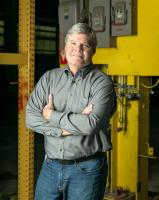
Jeff Smith, a former Managing Director with Alvarez & Marsal’s (A&M) Corporate Performance Improvement practice (CPI) from 2004-2014, is currently the co-founder of Work America Capital, a venture capital firm. In this role, he invests in Houstonians and Houston-based businesses. Prior to his time at A&M, Jeff spent 17 years at Arthur Andersen.
During his tenure at A&M, Mr. Smith along with Tom Elsenbrook co-founded the Corporate Performance Improvement practice. Mr. Smith credits Tom with being a wonderful mentor and friend to him before, during, and after their time together at A&M. Mr. Smith also spoke to the strengths and teachings of Tony Alvarez II and Julie Diehl.
Mr. Smith recently launched The Cannon in the new Founders District of Houston. The Cannon is a coworking ecosystem for Houston’s entrepreneurs, small businesses, freelancers, and creatives.
In the following Q&A, Mr. Smith discusses his time building A&M’s CPI practice with Tom, his success to date, his work in the Houston area, and how to remain humble as a leader.
How did you wind up at A&M?
Bryan Marsal was hired by Arthur Andersen partners to lead the liquidation of the firm. As part of this process he sold several practices, including our consulting practice, to various entities. After a couple of years in two different consulting organizations, Tom and I agreed to team up and start our own consulting firm. Simultaneously, we were approached by Bryan and Tony Alvarez about building this consulting firm within Alvarez & Marsal as a new division. It turned out to be a great environment and perfect timing, so we launched the practice in early 2004.
In 2004, you and Tom Elsenbrook founded the CPI practice. What were some of the challenges you faced and how did you surmount them?
The biggest challenge at the time was that we didn’t have any clients or employees. But we did have a high level of confidence, the experience, and relationships to hire great talent and sell to some large corporations based on our prior relationships in Houston. It took us a couple of years to figure out how to go to market as a core part of the A&M brand and when we did, it really helped differentiate us from our competition.
You have had many noteworthy clients over the years. Can you share with us any A&M memories that stand out?
Waste Management Inc (WMI) was a long-time client of mine and one of our first A&M consulting clients. WMI invited us to bid on a large-scale transformation project competing against all the top strategy houses. We were a major underdog to win this work but we assembled a joint team that combined consulting and restructuring, which resulted in us differentiating ourselves and allowed us to win the work. It was the first time I worked in a setting that combined both groups and it turned out very well. We were able to serve the client beautifully and up A&M’s game. Despite being from different practices, there was a lot of mutual respect in which we all became a team to serve the client. It gave me an appreciation for the breadth of capability of the firm.
You’ve had an amazing career trajectory. To what do you credit your success?
Several factors come to mind. Everybody in their career needs at least one valued mentor. A good mentor is somebody who has your best interest at heart, will be brutally honest with you, and will be very encouraging. I’m fortunate to have that with Tom Elsenbrook throughout my career.
Additionally, I found a career with consulting that played to my strengths. I’ve always had the ability to sort through information and quickly identify what really matters when others might get lost in the clutter. This, combined with the ability to clearly and concisely articulate my thinking, made a career in consulting a good fit.
In my professional and work life I have always tried to remain grounded and humble, but also walk with a lot of confidence. I’m very straight forward in my approach. Fortunately, that style has worked for building relationships with clients, coworkers, and people I have recruited. There has also been plenty of luck, good fortune and hard work, but not at the expense of sacrificing family.
After you left A&M you planned to retire. But retirement didn’t last long. You co-founded Work America Capital, a Houston Venture Capital firm with Mark Toon, an Arthur Andersen alumnus. Tell us why it’s so important to you to make investments in the Houston area.
I spent 51 years in Houston and retired to the Texas Hill Country. After 30 years, I was ready to do something different. I always knew my retirement wasn’t really a real retirement, more of a half time. I stayed retired for two years until something found me professionally.
I had a very close friend and business partner, Mark Toon, who was headed towards retirement from a Big Four accounting firm. We had worked together at Arthur Andersen and always wanted to do something together professionally. He joined me for golf at Cordillera Ranch and we thought about what we enjoyed the most professionally. We found that to be three things: firstly, we both loved the early stages of building a company where you scrape to get employees and clients. Secondly, we wanted to do something that was purposeful and would make a difference. The city of Houston is way behind as far as supporting a robust entrepreneurial environment. Historically, you had to go to Austin or to the east or west coast to be a successful entrepreneur. So, we wanted to have a hands-on approach to supporting the Houston entrepreneurial community. Lastly, we love mentoring and wanted to help teach the younger generation on how to successfully grow early stage businesses.
The outcome was a venture capital firm that we formed, Work America Capital (WAC), which was initially started with our own money and designed to help entrepreneurs in the early stages of starting up businesses. We began with three companies, but then started a fund that allowed us to expand to a dozen startups which are now currently running as six platform companies. 40 of our friends and Houston business leaders acted as limited partners. WAC maintains control both in terms of the equity position and the board allowing us to have a hands-on approach with growing the businesses. We are currently trying to decide when we want to launch a second fund.
How do you differentiate yourself from other leaders?
I have always tried to stay very authentic to who I am and refuse to play politics and gamesmanship. I’ve tried to stay humble in my approach. I’ve always hired people who were much smarter than I and tried to provide a great work environment for them and be committed to their success. Their success has enabled my success.
Did you have any mentors while at A&M? Do you keep in touch with anyone?
I had quite a few mentors while at A&M and one of them is Tom Elsenbrook. My relationship with Tom is probably one of the most unusual ones in my life. It’s hard to even classify. On one hand he has been a manager and mentor, and on the other hand he has been a very close and wonderful friend, spiritual ally, and golf buddy. He knows my weaknesses just as well as my wife does. They take my weaknesses and try to support me in those areas, like any good partner would.
Tony Alvarez has also been a mentor and reminds me a lot of myself. I’ve always valued his perspective and admired him. He is very direct, as am I. When we don’t see eye to eye, neither of us is good at giving in. So, Tom has often been tasked with being the peacemaker between us.
Sometimes it’s hard to know if a relationship is a peer or mentoring one. I’ve worked with so many partners at A&M and Arthur Andersen that I respect and admire. I worked with Julie Diehl and her strengths were so different from mine. She is masterful in forging very meaningful client relationships. Her clients simply love and trust her as an advisor and I learned a lot from observing her. I also worked closely with Mark Paling and witnessed how the people who work for him cared for him deeply. Boyd Mulkey has a unique good old boy style that is very disarming and effective in both leading clients and teams. There is so much you can learn by observing the kind of talent you are around every day in a firm like A&M.
What have you learned about consulting in your time at A&M?
I learned about edginess while at A&M. A&M Consultants don’t come in softly and gently into a meeting. They don’t come in with the mindset of building a client relationship. They come in with an urgent intensity toward solving a complex problem. That sense of urgency required some adaptation on my part, as I had spent most of my career prior to A&M working for clients who weren’t in mission critical situations but dealt with more strategic change.
I still care deeply about the firm and the people that are there. I have a daughter and son-in-law who both work at A&M. It’s interesting to see the firm through their eyes.