Alvarez & Marsal research identifies significant divergence within popular opinion on the tax and fiscal policy agenda set out by the new Prime Minister
On 22 June 2026, after UK Prime Minister Sir Keir Starmer resigned his leadership of the Labour Party, paving the way for a change of government, Alvarez & Marsal's Reputation Advisory practice undertook research on the potential impacts for businesses and investors in the UK economy.
With fieldwork undertaken by Find out Now, a representative base of over 1,000 UK voters provided insights and feedback on the economic policy questions addressed by Andy Burnham during the Makerfield by-election.
The study pointed to a divided nation and tough choices ahead for the future government. It found:
- Broad support for fiscal discipline: UK investors (net +31%) , Labour Party Voters (net +18%) and all UK voters (net +18%) are in favour of maintaining the fiscal rules set by the previous Labour government on balancing the budget, managing national debt and reducing welfare spend.
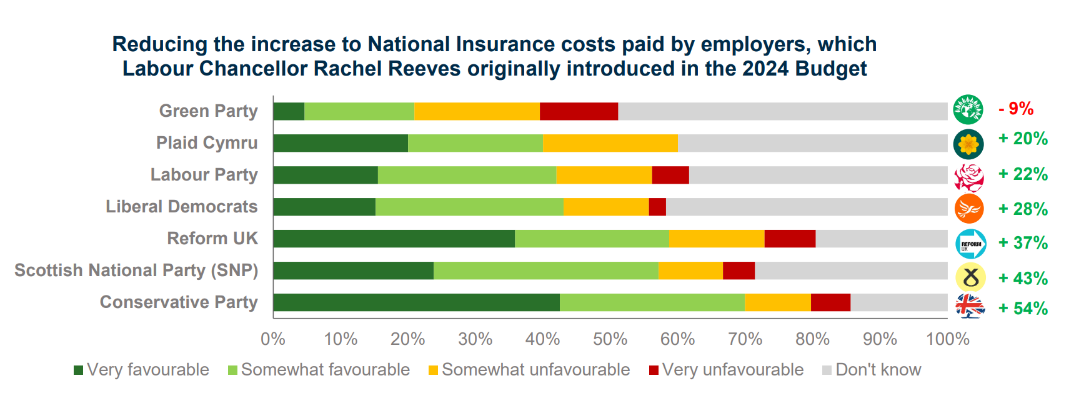
- Reversing the National Insurance increase by the last Labour government: Cutting employers National Insurance Contributions, to the level before the 2024 Budget, is backed by most voters across the political spectrum. The strongest support comes from the Conservatives sitting at net +54%. Green party supporters were the only voter group opposed to this measure.
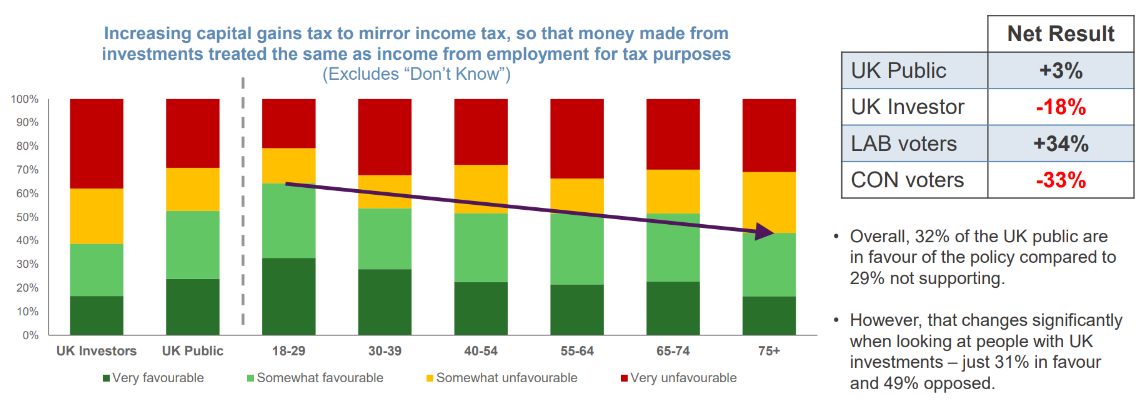
- No easy path for Capital Gains Tax hike: Burnham and his supporters have advocated for bringing CGT in line with income tax. This measure sharply splits public opinion. It would appear easy to get this position backed by Labour MPs (net +34% support among party voters) but the UK public mood is finely balanced on this issue (net +3%), with strong opposition from Conservative voters (net -33%), Reform voters and all voters influenced by their investments in UK equities and bonds (net -18%)2.
- Favourability towards Burnham's proposed business rate cuts: Cutting business rates for pubs, cafés and small high street businesses, funded by higher taxes on warehouses, has been one of Burnham's few specific policy positions. It attracts strong cross-party and nationwide support, with just 6% of the public opposed.
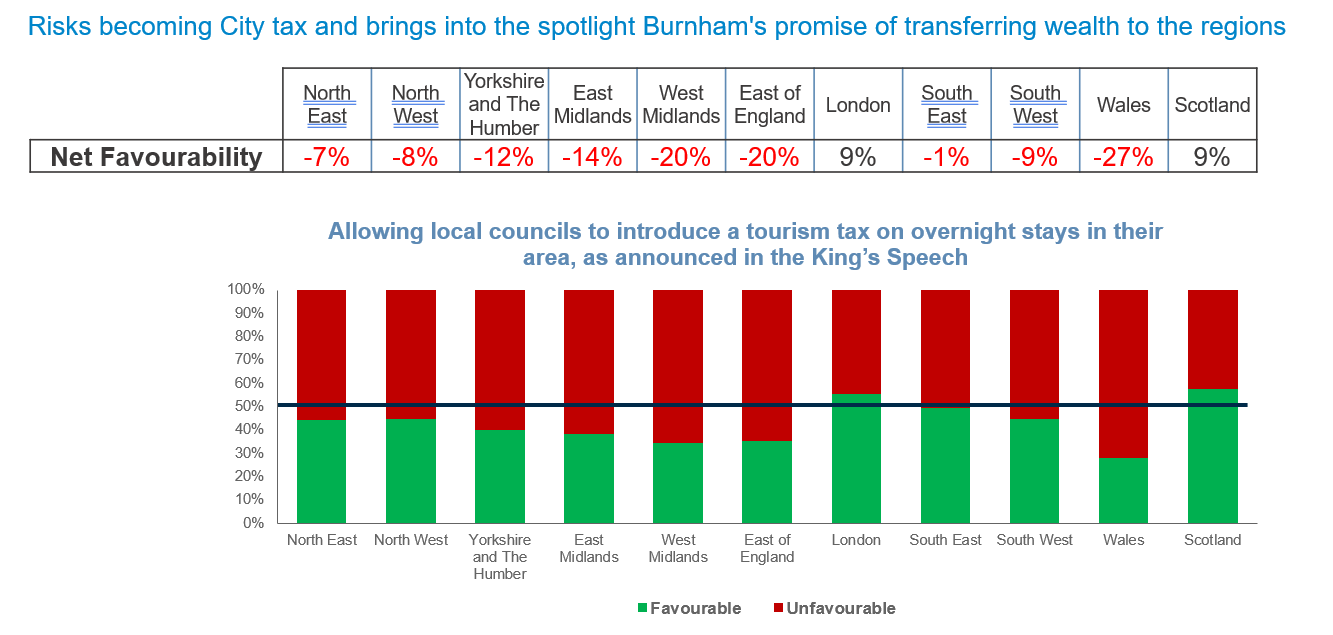
- Regional pushback on tourism taxes: The devolved tourism tax, as announced in the King's Speech, is unpopular across the country outside London and Scotland, with net favourability falling as low as -27% in Wales and East of England. It risks only being adopted by local authorities in major cities, posing a challenge for Burnham's mantra to prioritise investment across the UK's regions and left behind towns.
The findings demonstrate the incompatibility between economic priorities and fiscal discipline in an age of populism in politics. It requires businesses to scenario plan for an array of decisions ahead, made out of Westminster, that could create adverse change in market reaction, consumer spending and economic activity across the UK and beyond.
Sources:
- What would Andy Burnham do if he becomes Prime Minister? - LabourList (Tables & Charts)
- Andy Burnham plots property tax raid as he begins by-election campaign - Times
If you would like to receive the full research findings, please contact us below.
Contact Us.