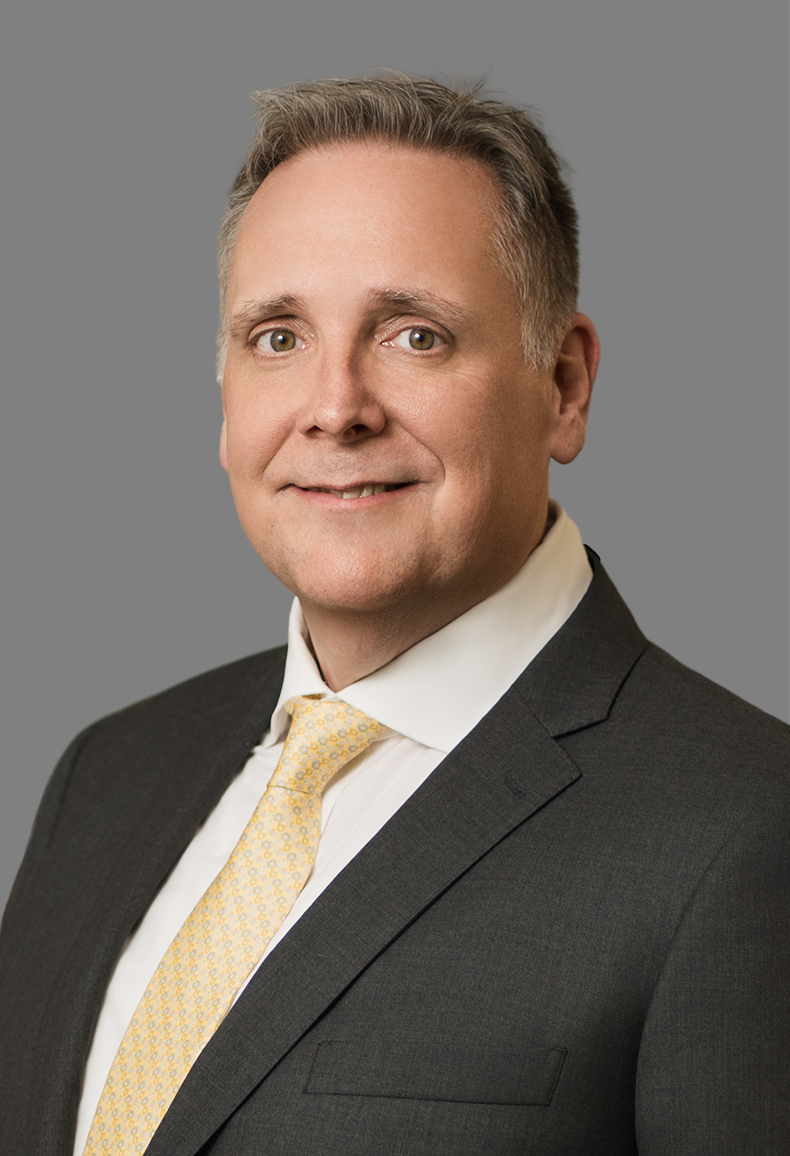
25+ years of experience across the Asia–Pacific and US
Specializes in complex international trade advisory work and high-stakes investigations and enforcement
Expertise in duty mitigation strategies such as origin planning, valuation, tariff engineering, and supply chain structuring, as well as trade remedies such as antidumping and countervailing duty trade investigations and enforcement
New York
@alvarezmarsal
Copied!
Will Marshall is a Managing Director with Alvarez & Marsal Tax in New York. He leads A&M’s Global Trade and Customs practice. Mr. Marshall specializes in customs and international trade structuring and duty optimization, regulatory disputes and controversies, and high-stakes investigations.
With more than 25 years of international trade experience, Mr. Marshall has led international trade practices at large international firms across both the Asia–Pacific region, where he was based for nearly two decades, and the US.
Prior to joining A&M, Mr. Marshall led the trade remedy practice for the world’s largest customs and international trade boutique law firm, where he represented clients in trade remedy investigations, such as antidumping, countervailing duty investigations before the Department of Commerce, and import injury investigations before the International Trade Commission. He also acted for clients on enforcement actions related to trade remedies.
Mr. Marshall earned a bachelor’s degree in economics from The Ohio State University and a JD from Rutgers Law School at Rutgers University–Newark. He is admitted to the bar of the State of New York and is a Solicitor of the High Court of the Hong Kong Special Administrative Region. He speaks conversational Mandarin and Cantonese.
On July 23, 2026, the Office of the United States Trade Representative (USTR) issued a notice of action concluding 60 parallel Section 301 investigations into the failure of various economies to impose and effectively enforce a prohibition on the importation of goods produced with forced labor. Acting under the specific direction of the President, the Trade Representative is imposing additional tariffs of 10 percent or 12.5 percent on all products of each of the 60 investigated economies, subject to enumerated exemptions. The additional duties apply to goods entered for consumption, or withdrawn from warehouse for consumption, on or after 12:01 a.m. Eastern Time on July 24, 2026.
On July 20, 2026, President Trump signed three proclamations imposing an additional 50 percent ad valorem duty on specified baskets of Canadian-origin goods. The duties apply to goods entered for consumption, or withdrawn from warehouse for consumption, on or after 12:01 a.m. Eastern time on August 19, 2026. The proclamations invoke Section 338 of the Tariff Act of 1930 (19 U.S.C. § 1338)—a long-dormant provision that never previously used to impose duties—together with 3 U.S.C. § 301 and Section 604 of the Trade Act of 1974 (19 U.S.C. § 2483).
On July 20, 2026, the President issued a proclamation establishing a new incentive program under the Section 232 aluminum tariff regime. Companies that commit to building, expanding, or refurbishing U.S. primary aluminum production capacity may be eligible to import a corresponding volume of primary aluminum at half the otherwise-applicable Section 232 duty rate—25% instead of the current 50%.
In July 2026, the DOJ/DHS Trade Fraud Task Force published its first joint Resource Guide to Trade Fraud Enforcement. Although the Guide creates no new legal authority, it consolidates the government’s enforcement framework in a single public document and, in doing so, signals how DOJ and DHS intend to investigate, charge, and resolve trade fraud matters. Publications of this kind are infrequent and rarely incidental; the Guide should be read as a statement of enforcement intent.