A&M Perspectives: How asset light pharmaceutical companies can augment value creation in a disrupted market environment
Over the past two decades, originator pharmaceutical businesses have increasingly disposed of late-stage drug portfolios to third parties. This has spurred the growth of asset-light pharmaceutical companies with radically different operating models. Operating through networks of Contract Development and Manufacturing Organisations (CDMOs), these businesses avoid major capital expenditure, have greater flexibility, and can therefore focus on critical capabilities such as supply chain excellence, market authorisation and technical transfers.
While there are advantages, asset-light models are complex. Many different partners are involved, comprising of specialised CDMOs, distribution partners and a mix of in-house sales and country distributors. This leads to challenges related to demand planning, inventory control and cost control.
At the same time, asset-light pharma businesses are having to respond to global challenges including rising inflation, supply chain disruptions, Covid-19 outbreaks and growing geopolitical tensions.
Based on our experiences of delivering change for a range of asset-light pharmaceutical companies across Europe, we recommend five levers of value creation.
Five value levers for asset-light pharmaceutical businesses
- CDMO rationalisation and technical transfer excellence
- S&OP/ IBP upgrades
- Inventory and working capital optimisation
- Logistics simplification
- Digital tools deployment (commercial focus)
Download
Related Insights
Shocks to global supply chains are increasing in frequency and severity. Russia’s invasion of Ukraine, new Covid outbreaks in China and rising interest rates in the US are occurring at once with ramifications for global trade. What steps can companies take to improve supply chain resilience.
Lee Health is Transforming Growth Into a Truly Integrated Health System
August 4, 2026
Healthcare transformation isn't just about growing. It's about creating a system where patients experience coordinated, seamless care.
Beyond the Bottom Line: Leading with Purpose at Phoenix Children's
July 28, 2026
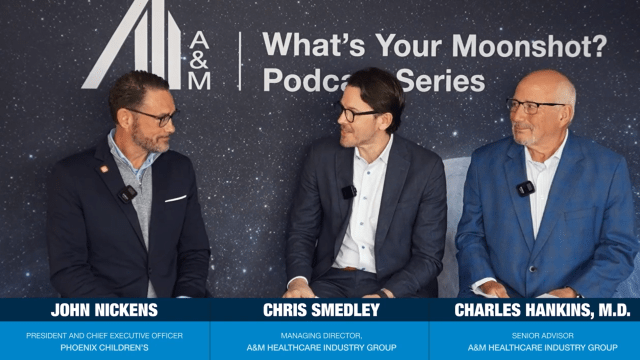
Healthcare leadership isn't just about today's outcomes—it's about shaping the future. John Nickens, President and CEO of Phoenix Children's, joins A&M Healthcare Industry Group's Christopher Smedley and Charles Hankins, M.D. to discuss leading beyond the bottom line, including investing in people, culture and strengthening the communities his organization serves.
From Sideline to Center Stage: The Rapid Rise of ICHRA for Health Plans. Are You Ready?
July 23, 2026
The Individual Coverage Health Reimbursement Arrangement (ICHRA) market has reached a tipping point. Enrollment nearly tripled in 2026—a 2.8x increase over 2025, with between 400,000 and 800,000 Americans now enrolled and the redistribution of group membership has begun. This is not incremental change.
The Affordability Agenda: Inside Healthcare's Cost Crisis
July 14, 2026
What will it take to bend the healthcare cost curve? Jay Khosla, Chief Government Affairs Officer at Humana, joins A&M's Craig Savage and David Shulkin, M.D. to examine the financial realities shaping healthcare's future and discuss how transparency, value-based care and responsible AI adoption can help drive better outcomes.