With the incoming US administration's announcement of planned tariffs and trade control measures, organizations and investors will need to adapt to a changing regulatory trade landscape to optimize market and policy opportunities. In a recent A&M article, our team discusses key considerations to prepare for anticipated changes including researching probable market impacts and risk, reviewing contracts, implementing Section 301 mitigation strategies and reviewing the supply chain.
How A&M Can Help
- HTS Classification
- Market and Product Research
- Economic Modeling
- Organization and Supply Chain Adaptation
- Product Exception Requests
- Duty Deferral Strategies, Bonded Warehouses and FTZs
- Trade Controls and Sanctions
- Contract Evaluation
Read the full article to discover how A&M's team of experts can help successfully navigate your organization's tariff and trade authority risks.
Read the Full Article Here
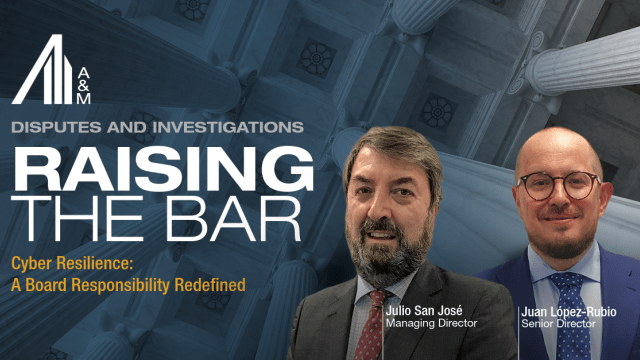
Cyber Resilience: A Board Responsibility Redefined
August 24, 2026
Cyber threats are moving faster, AI is changing how attacks are carried out, and advances in quantum computing could put today’s encrypted data at risk in the future. Managing Director Julio San Jose and Senior Director Juan Lopez-Rubio Fernandez explore what these shifts mean for business leaders and why cyber resilience is increasingly a board-level responsibility.
The New ICC 2026 Arbitration Rules
August 12, 2026
The ICC's new 2026 Arbitration Rules are the biggest update since 2021, bringing faster timelines and tighter disclosure rules. Here's what it means for experts working on ICC cases.
The Dual Mandate: AI for IA & IA for AI
August 7, 2026
Alvarez & Marsal hosted The Dual Mandate: AI for IA & IA for AI, bringing together senior Internal Audit leaders for an evening of practical discussion on how organizations are navigating AI adoption while strengthening governance and assurance.
The £3.3 Million Legal Victory Protecting the House That Hosted a Tudor King
August 3, 2026
Alvarez & Marsal senior director Mohammad Yadollahi’s expert testimony recently helped claimants win £3.3 million pounds in damages for a historic building where King Henry VIII once stayed.