Alumni Spotlight: Amelia Fox
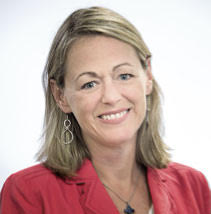
Amelia Fox, a former Senior Director with Alvarez & Marsal’s (A&M) Corporate Performance Improvement (CPI) practice from 2005 to 2011, is currently Founder and Chief Strategist at J29 Strategies, a Tampa Bay-based firm helping mission-driven organizations strengthen their impact through strategic clarity and organizational collaboration.
In the Q&A below, Ms. Fox shares what brought her to A&M, the mentors who shaped her, and how her consulting foundation continues to inform her work today.
You joined A&M several years after you graduated from Yale with an MBA. What ultimately brought you to A&M?
After spending five years consulting with a reputable Big Four organization, I was thrilled to join A&M and seize the opportunity to be the third member in the Atlanta office. The prospect of being a part of a growing organization from the ground up was highly appealing to me, especially since it provided a chance to delve further into management consulting. Working alongside Kevin Redmon and Mark Miller, we had the privilege of expanding the office to a team of thirty-something exceptionally talented individuals. It was truly exhilarating to witness the remarkable growth of our organization, all while having the unwavering support and credibility of A&M, an established player in the market. I felt like I had the best of both worlds—the dynamism of a startup without the uncertainty and risk that comes with it.
Can you share a notable memory you have of your time at A&M?
During a project at a privately held company owned by a private equity (PE) firm, I was given the opportunity to serve as the acting Chief Marketing Officer on an interim basis. As part of the project, we traveled to Chicago to present to the PE firm and bank, and it was during this experience that I learned the importance of sitting with your back to the window to avoid the glare of the sun while presenting. This may seem like a small memory but controlling the meetings is so important and nuances like this do make a difference. (In fact, I used this exact skill a few weeks ago to my advantage!)
Another memorable project I worked on was in Atlanta with a team of five individuals, all of whose names started with the letter A. We playfully dubbed ourselves the "A-Team" and had a blast working together. It was a privilege to collaborate with such talented people and gain valuable experience.
One particularly noteworthy memory I have is presenting on the NYC schools project to Joel Klein, who was the Chancellor of Schools at the time. It was an incredible honor to present at such a senior level, especially to someone overseeing a $15 billion school system.
The experience I gained at A&M was truly invaluable. Even now, not a week goes by without me utilizing something I learned or recalling a decision I made while I was there. It was without a doubt the most rewarding place I've worked in the private sector. The memories, friendships and relationships I formed during my time at A&M are extremely dear to me.
Did you have any mentors from your time at A&M?
I feel incredibly fortunate to have had Kevin Redmon as a close mentor throughout my career. I also worked closely with John Rossman. I acquired a wealth of knowledge from Kevin and John in areas such as strategy and customer relationship management (CRM) and learned how to think more broadly. Sajan George was also instrumental in the NYC schools project, and through working with him, I gained invaluable experience in achieving the next level of preparedness for presentations.
One of the most remarkable aspects of A&M’s company culture was the ability to pick up the phone and seek guidance from anyone in the organization. I felt grateful to have access to daily mentors who were always willing to provide valuable insights, no matter the time or situation.
What makes a great Chief Strategy Officer and/or Chief of Staff?
A great Chief Strategy Officer or Chief of Staff is a skilled listener, has the ability to connect the dots and makes complex issues easily digestible. Another vital quality is their willingness to ensure that plans are executed and implemented and become a core part of the company.
To illustrate, I recall walking into the office at LSF recently and witnessing a large training session where one of our VPs was leading the harassment training; she launched the training with our one-page strategy slide which illustrates our mission, vision and values and how core they all are to the company. Her key message was that if we followed the firm’s values that, in and of itself, would ensure a harassment-free environment. This example highlights the importance of having a strong and clear core strategy.
As a Chief of Staff, my role is a little unique. I'm an advisor to the CEO and a problem-solver. This approach necessitates being objective and honest with the CEO, which has been crucial in my role. It's not easy to be truthful, particularly when the CEO's views differ from mine. However, being authentic and honest has always served me well. I actively listen to resistance and feedback to see if there's something I've overlooked or haven't considered. My willingness to adapt and adjust is a vital quality in this role.
What have you identified as the core differences and similarities between consulting and philanthropy?
One commonality between consulting and non-profit work is that they both involve helping people and solving problems. In consulting, the company or individual has a problem and lacks the capability to solve that internally, whereas non-profits aim to address complex societal issues such as poverty, mental health and immigration. Although the content is different, both fields aim to solve problems. At the management and executive leadership level, the problems being solved are complex in nature. There is a difference in the approach taken to solving the problems: Consulting work generally involves solving the problem and leaving, while non-profit work generally involved finding ways to address the issue and moving forward, even if the entire issue cannot be resolved.
The pace in consulting is intense, as companies pay for quick solutions to often complex problems. In contrast, non-profits must work within funding restrictions and often deal with salary and other limitations. In the non-profit and philanthropic space, the challenge lies in balancing the needs of clients and funders; non-profits serve their clients, but also serve their funders which are usually not the same audiences. These systems have been in place for a long time, and the issues we face in society are daunting, such as extreme poverty and mental health issues. Many organizations in the non-profit sector are trying to address these systemic problems while simultaneously serving the daily needs of individuals and families, which can be challenging. Additionally, unlike consulting, the goal of most non-profits is to reduce the number of clients needing help, ultimately working towards putting the non-profit sector out of business entirely!
I believe that solving the more complex societal issues will require stronger public-private partnerships. Businesses have a stake in the issues – their employees, customers and communities in which they serve are impacted by these issues. We must find new ways of working together to address the systemic issues. One thing I love about being in Tampa is that we are a young and growing city and have the potential to be a model for the nation in addressing these issues. If businesses can leverage their resources and brainpower, and non-profits can contribute their knowledge, there is a unique opportunity to come together and make a real impact. While the skill sets may be similar between consulting and non-profit work, the impact of the problems being solved in the non-profit space is more systemic and wide-reaching.
What drives you to succeed?
Improving things has been a lifelong passion of mine, starting from childhood. Whatever I’m doing, I want to do it a little better, a little more efficiently, and help people start and stop what they need to do in order to get where they need to go. This has been a consistent theme throughout my life.
I tend to become frustrated with excessive bureaucracy and have always believed that the status quo is unacceptable. Being stagnant can lead to the development of bad habits and inefficient processes, which ultimately harms our customers, clients and the people we serve. This, in turn, negatively impacts our bottom line.
Both my parents were hardworking individuals, with my father holding multiple jobs and my mother returning to college while I was in elementary school. Witnessing their strong work ethic and innovative problem-solving skills instilled in me the desire to be innovative and find new solutions to problems.
Who inspires you?
The strong and talented women I work with are my biggest source of inspiration. I have been fortunate to have friends from college who have gone on to accomplish amazing things, as well as colleagues from graduate school and my first job, who have supported me throughout various stages of my life, and the women I worked with at A&M, like Cyndi Joiner. These women drive me to do better, and I feel grateful to both give and receive support from them.