The Real Estate and Environmental Economics practice has been retained on some of the largest and most complex environmental matters around the world. We have experience ranging from single parcels to matters involving tens of thousands of parcels in all asset classes, including residential, commercial, industrial and agricultural. Our work has included the study of impacts alleged to have been caused by air emissions, ground water, surface water, soil, odors, noise and other disamentities.
Our team offers the following analytical services:
- Real Estate Damages/Class Certification Analysis: Cost, use and risk analysis related to allegations of property value diminution
- Value Assurance Programs/Institutional Control Programs: Proactive programs to address sales of properties at less than market value, access issues, releases or settlement programs
- Environmental Liabilities: Current and future damage, future contingent liabilities, EPA BEN and ABEL models
- Real Estate Research, Data Analytics and GIS: Statistical analysis, literature review, proprietary models, cycle analysis, cloudbased mapping solutions
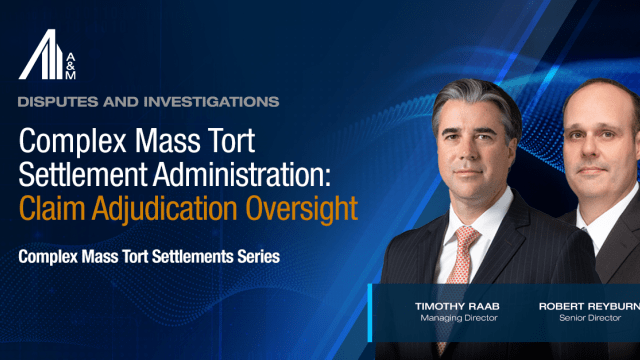
Complex Mass Tort Settlement Administration: Claim Adjudication Oversight
July 21, 2026
Part two of our Complex Mass Tort Settlement Series explores a critical gap in claim adjudication oversight across large settlement programs that distribute billions of dollars. Learn the best practices that help ensure equitable claim resolution.
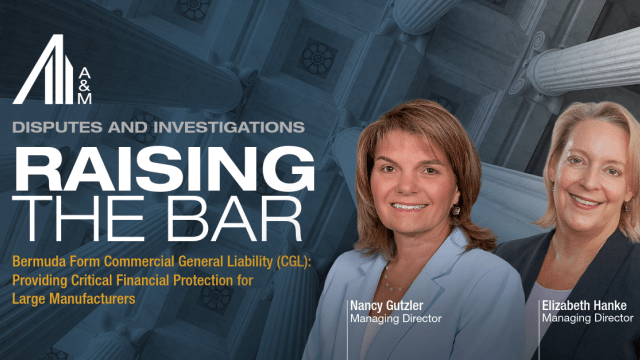
Bermuda Form Commercial General Liability (CGL) – Providing Critical Financial Protection for Large Manufacturers
July 16, 2026
Managing Directors Nancy Gutzler and Elizabeth Hanke examine key features of Bermuda Form policies and share practical guidance for navigating notice requirements, occurrence definitions, deductibles, and claims documentation.
New Financial Regulation in English Football: Key Takeaways from LawInSport's Football Law 2026
July 2, 2026
Ashley Churchman, Director with A&M Disputes and Investigations, moderated a panel session titled “Navigating Financial Regulations,” discussing the overhaul of the English Premier League’s financial rules and other developments affecting clubs, lenders, and advisers in 2026.
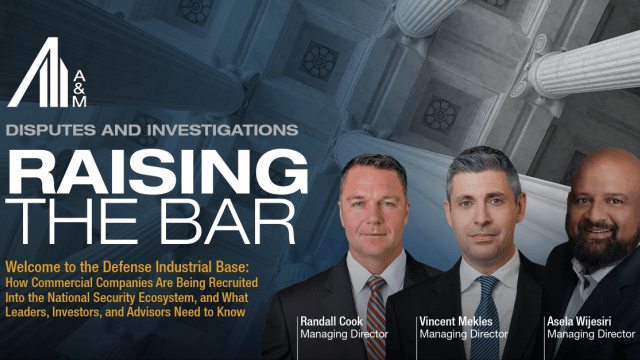
Welcome to the Defense Industrial Base: How Commercial Companies Are Being Recruited Into the National Security Ecosystem, and What Leaders, Investors, and Advisors Need to Know
June 29, 2026
In this article for Raising the Bar, Managing Directors Randall Cook, Vincent Mekles, and Asela Wijesiri examine how procurement reform, AI and technology convergence, and expanding national security priorities are pulling traditionally commercial organizations into Defense Industrial Base expectations.